
What a Conversation in Italy Taught Me About the American Frontline Workforce

On Restoration, Depletion, and Building a Workforce With a Sustainable Quality of Life
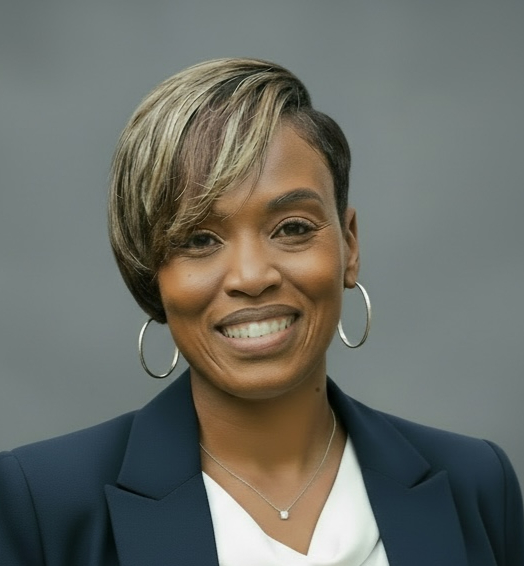
Tamika Curry, Ph.D., Founder and CEO, Morse Regent
I recently returned from traveling to Italy, Greece, and Turkey. Specifically, Rome, the Greek islands, Kusadasi and Ephesus, then Naples, Positano, Amalfi Town, and Ravello. But it was a conversation on a coastal road somewhere between Naples and Ravello that I have been thinking about since.
Our driver, a guy who had spent most of his life in Sorrento and a stretch of time in Amsterdam before coming back, was one of those people you meet on a trip who makes you think. He was curious about American life the way I was curious about his. We asked each other questions. He had visited Alabama and loved it. He wanted to see New York City and Chicago next. Of course, I encouraged him to add Philly to that list. The conversation was easy and wide ranging. And somewhere in the middle of it, with the coastal towns stacked up the cliffs around us, he said something that stayed with me long after the drive ended.
From his perspective, Italians, at least in his experience growing up in the south of Italy, try to live with more joy, more presence, more of what he described as a sustainable quality of life. Not defined by the work. Not organized around constant pressure to work and productivity. More present in the moment, in the meal, in the people around them. He was not saying it as a criticism of Americans. It was his observation. A way of describing a difference he sensed between the two cultures.
I appreciated it. And then I offered my own perspective. I am not suggesting one system is better than the other. Each has its trade-offs and what works in one cultural and economic context does not automatically translate to another. But the contrast was worth sitting with. I told him Americans are not uninterested in quality of life. We are not culturally opposed to rest or presence or a long lunch in good company. But the structure of American life does not make those things as accessible as they might appear from the outside. Healthcare is tied to employment. Student debt follows people for decades. Housing costs in most American cities consume a disproportionate share of income. There is no robust social safety net that allows someone to slow down without risking everything. Quality of life can be available at every income level, although I pointed out that poverty, and the chronic stress and material deprivation that comes with it, narrows that access in ways that are real and significant regardless of mindset or intention. The conditions that allow you to access quality of life consistently are not equally distributed. And for many Americans, particularly those working frontline and direct service jobs with unpredictable hours and wages that barely cover their basic needs, quality of life is not something the system is designed to protect.
That exchange opened a much wider conversation. We talked about Italian healthcare, universal and routine from his experience, though he acknowledged the wait times for specialists can be long. We talked about education, free through public university in Italy, which shapes how Italians think about opportunity and class mobility in ways that are fundamentally different from the American experience of student debt. We talked about the tax burden he described in Italy, which sounded excessively high to me, and what it buys in return. We talked about the Italian political system with its multiple parties that force coalition building because no single party is likely to command a clear majority. We had our own quiet exchange, in a vehicle with seven of my family members along for the ride, about the pros and cons of that compared to a two party system. Things may move slower when consensus requires more voices. But more voices also means more of the population has to be brought along. I also asked him about the Black population in Italy. When I travel internationally I make a point of trying to understand what life looks like for Black people in the places I visit. He told me that while the south where he was from has a smaller settled Black and African community, the north has seen significant growth in African immigration in recent years. We did not go deep on that thread, but I filed it away. As a Black woman who travels with that lens wherever I go, it was a question I needed to ask. We also talked about American sports and a lot about food, the daily trip to the market in southern parts of Italy in particular, cooking whatever you bought that evening, mozzarella with a shelf life of one day, the oversized lemons hanging from trees, blood oranges, olive oil pressed from trees. It was the kind of conversation that makes a long drive feel short.
If you know me then you know we could have talked for hours longer. And somewhere in all of it I kept returning to the same question. Not which system is better. But what choices a society makes about what it chooses to protect. That question followed me all the way home. And it landed hardest when I thought about the people I know who never get that choice.
Quality of life can be available at every income level. But the conditions that allow you to access it consistently are not equally distributed.
And Then I Thought About the Frontline Workforce
I came home and could not stop thinking about a specific group of people. The direct support professionals (DSPs), patient care technicians, certified nursing assistants (CNAs), case managers, community health workers, behavioral health technicians, and residential counselors who make up the frontline workforce of the nonprofit and mission driven sector. And I could go on. Cashiers at supermarkets. Bus drivers who get our children to school safely every morning. Administrative assistants in schools and organizations holding everything together behind the scenes. All of whom were deemed essential workers during the COVID-19 pandemic. All of whom are earning wages that in many cases do not meet the basic cost of living in 2026, when inflation has made that gap even wider. These are some of the most important workers in this country. They are with people in their most vulnerable moments. They hold families together. They sit with people in crisis. They show up every day to do work that most people could not sustain for a week, and they do it for wages that in many cases qualify them for the very services their organizations provide.
The extended midday break my driver described from his experience in Sorrento, what Italians call the riposo, did not sound to be a universal Italian experience. In the larger cities and the north, including Rome where I started my trip, the workday looks much closer to what Americans would recognize. But in the smaller towns of southern Italy, in Sorrento where he was from, in the villages along the Amalfi Coast, the riposo is still a living practice. Businesses close between one and four in the afternoon. People go home. They eat a real meal. They rest. And then they return to work. It is a structural acknowledgment, built into the rhythm of daily life, that human beings need restoration in order to perform. That acknowledgment does not exist for most of the frontline American workforce, and arguably not for any part of the workforce.
Positions go unfilled and the caseload gets redistributed. Supervision gets canceled when budgets tighten. Benefits get quietly reduced. And the organization sends out an appreciation email during Direct Support Professional (DSP) Recognition Week and calls it investment in the workforce.
I have been in those rooms. I have led those workforces. I have watched talented, committed, deeply capable people leave the sector not because they stopped caring about the mission but because the mission was consuming them faster than anything could restore them. That is not dedication. That is depletion. And the sector has been calling it dedication for so long that it has stopped noticing the difference.
The sector has been calling depletion dedication for so long that it has stopped noticing the difference.
This Is Not a Soft Argument. It Is a Financial One.
Nonprofit leaders navigating tight budgets sometimes frame workforce investment as a luxury they cannot afford. I want to reframe that. Workforce depletion is not a human resources problem. It is a financial and operational one. According to research from both Gallup and SHRM, replacing an employee costs between 50% and 200% of their annual salary depending on the role and seniority level. That range is wide because it reflects real variation. For a frontline direct service worker earning $35,000, that could mean $17,500 to $70,000 per departure. For a program director or supervisor the number climbs significantly higher. In an organization losing multiple staff at multiple levels simultaneously, and most organizations in this sector are, the financial toll accumulates faster than most leaders realize. Burnout reduces performance before it results in departure, which means organizations are paying full cost for diminished capacity long before anyone submits a resignation. Vacant positions redistributed to existing staff do not solve the problem. They accelerate it.
It is also important to name something that often gets left out of this conversation. Part of the reason nonprofit organizations struggle to pay frontline workers adequately is not entirely within their control. Medicaid reimbursement rates and other government funding streams for direct service work have not kept pace with the actual cost of delivering those services. Organizations are being asked to do more with funding levels that were set years ago and have never been adjusted to reflect inflation, workforce market conditions, or the true cost of quality care. That is a policy problem as much as an organizational one, and it deserves to be named as such.
That said, what organizations can control matters too. That means honest conversations about compensation within the funding they do have. It means caseload standards that reflect what a human being can actually carry without breaking. It means leadership that understands the connection between workforce sustainability and organizational financial health, because those two things are not separate conversations.
Our driver was not wrong about quality of life. He was describing something real about what a culture chooses to protect. The question I came home with is what the nonprofit sector is choosing to protect. The mission statement on the wall or the people who make the mission possible every single day. My travels did not make me romantic about work life balance. They reminded me that the people doing the hardest work in our communities deserve more than our gratitude. They deserve systems that are actually designed to sustain them.
The question is not whether we value the frontline workforce. The question is whether our systems are designed to show it.
Morse Regent is a turnaround advisory and interim executive leadership consulting firm partnering with mission-driven organizations, particularly those in healthcare, behavioral health, and education, at pivotal inflection points in their financial and operational performance, so that the organizations doing the most important work in our communities can continue to make the impact they were built to deliver. If any part of this resonated with you, let's talk.