
Billions Will Transfer. Will Leadership? The Nonprofit Risk
Updated: May 11

Baby boomer retirements are reshaping money, power, and leadership across every sector, exposing critical gaps in nonprofit succession planning in the age of AI adoption.
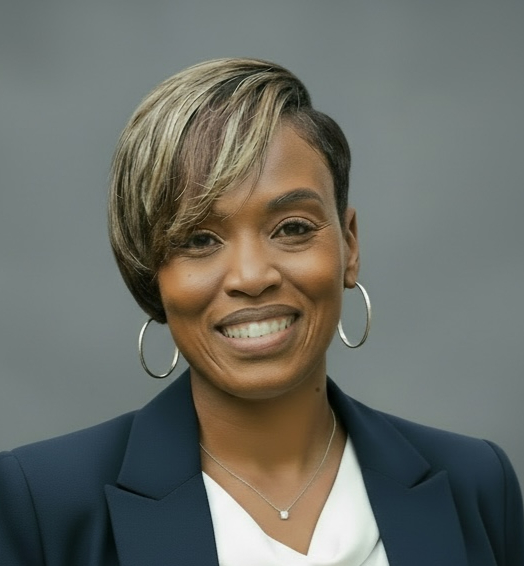
Tamika Curry, Ph.D., Founder and CEO, Morse Regent
The great wealth transfer has been called the largest transfer of wealth in history. Nearly $124 trillion in assets is expected to change hands over the next two decades as baby boomers retire. But the retirement of baby boomers is not just moving money. It is shifting business ownership, political leadership, civic influence, and nonprofit leadership in ways that most organizations aren't unprepared for. According to the US Census Bureau, more than half of all small business owners in the United States are over 55 and one in four is 65 or older. Over 10,000 boomers are turning 65 every single day. The conversation about what happens to their wealth is everywhere. The conversation about what happens to everything else they built is long overdue.
Three national studies over the past decade found that up to 75 percent of all nonprofit executives planned to leave their positions within the next five to seven years. At the Fitler Forum in Philadelphia, a speaker said something that captured the stakes of that moment perfectly. "When the organization starts becoming about the person in charge and not the organization, you're in trouble." That is not about bad leadership. It is about what happens to good organizations when succession planning never makes it to the top of the agenda.
What long tenure actually gives an organization
A CEO who has led a nonprofit for 20 or 25 years brings something genuinely valuable. They know the history, the regulatory landscape, the funding relationships, and the community dynamics that would have undone a less experienced leader. Their institutional knowledge is real and their relationships are often the reason the organization survived its most difficult seasons. That deserves to be honored before it is challenged.
Where the problem lives
The problem is not long tenure. The problem is what accumulates quietly around it. When an organization's most critical knowledge lives in one person's memory, and its most important relationships exist only in one person's contact list, and its board has spent so many years in a supportive posture that it has stopped asking hard questions, the organization has not built stability. It has built a single point of failure.
An unplanned leadership departure is a liability buried in the assumptions your organization makes every day that shows up nowhere until it does. Emergency executive searches are expensive. Funders and government partners who built their confidence on a personal relationship with a specific leader do not automatically transfer that confidence to whoever comes next.
Research from UC Berkeley's Mack Center on Nonprofit Management confirms what most people in this sector already know from experience: pressing matters consistently push succession planning to tomorrow, even when boards and leaders acknowledge it as their responsibility. For the sector, this is not a future problem. It is already here.
What AI changes about this conversation
Most nonprofits are still navigating the early stages of AI adoption. Many are just beginning to use conversational AI tools in their day-to-day work. That is the honest reality of where the sector is right now. But the technology landscape is not waiting for the sector to catch up. AI agents, systems that can autonomously manage workflows, monitor compliance, analyze financial patterns, and surface risk in real time, are already moving from concept to reality in other industries. Nonprofits that are still figuring out conversational AI today will be expected to operate in an agentic environment sooner than most boards are planning for.
This matters for succession planning in a very specific way. The succession question used to be primarily about relationships and experience. Who knows the funders. Who has navigated the regulatory environment. Who the community trusts. Those things still matter enormously. But the next generation of nonprofit leaders will be expected to lead organizations through a technology transformation that most of their predecessors never had to navigate. The leaders who can read those signals, ask the right questions of their systems, and make sound decisions in an AI-enabled environment are going to lead very differently from the leaders who built their organizations on relationships and institutional memory alone.
A board that selects a successor based entirely on who can replicate the outgoing leader's relationships is solving for the past. The question worth asking is not just who leads next. It is what that leader will be walking into, and whether the organization is handing them a foundation or a deficit.
What boards actually owe the mission
Boards that love their CEO often confuse loyalty with governance. Those are not the same thing. Planning for a leader's transition is not a betrayal of what they built. It is the most responsible thing a board can do for the mission and for the leader themselves.
Start with an honest assessment of where your organization actually is. Not where you hope it is. Where it is. What is documented and what lives only in one person's head. What your board knows about the organization's financial position, operational systems, and technology readiness. Whether you have identified internal leadership potential or whether you are one departure away from a crisis search.
If that assessment reveals gaps, that is not a failure. It is information. And there are options. Interim executive leadership can help an organization navigate a transition while building the infrastructure the next permanent leader will need. An advisory partner can help a board see what it has stopped noticing from inside the organization and develop a succession framework that accounts for where the sector is heading, not just where it has been.
The question is not whether your organization will face this transition. It is whether you will lead it or be led by it.
Morse Regent is a turnaround advisory and interim executive leadership consulting firm partnering with mission-driven organizations, particularly those in healthcare, behavioral health, and education, at pivotal inflection points in their financial and operational performance, so that the organizations doing the most important work in our communities can continue to make the impact they were built to deliver. If any part of this resonated with you, let's talk.